Marketing Strategies
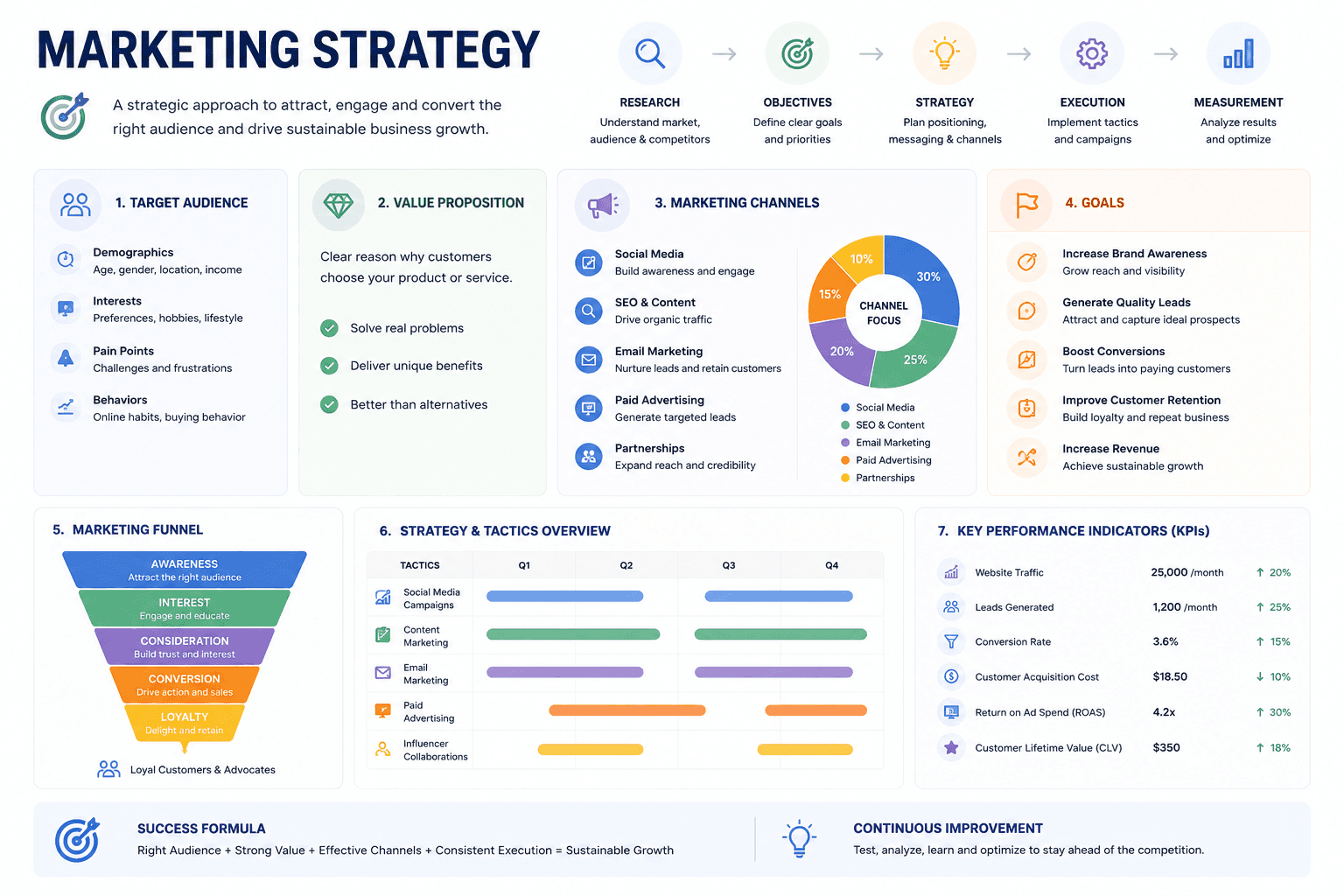

A marketing strategy is the complete plan used to attract visitors, turn them into customers, and grow a business consistently. Without marketing, even the best products and most beautiful stores may never generate sales. A successful marketing strategy focuses on understanding your audience and delivering the right message through the right channels at the right time.
Marketing is not simply “running ads.” It includes:
Brand positioning
Audience targeting
Content creation
Customer retention
Conversion optimization
Performance analysis
The purpose of a marketing strategy is to:
Increase brand awareness
Generate targeted traffic
Build customer trust
Improve conversion rates
Increase long-term revenue
A strong ecommerce marketing strategy usually includes several channels working together:
Social Media Marketing: Platforms like TikTok, Instagram, Facebook, and Pinterest help brands reach large audiences through engaging content, short videos, and viral trends.
Paid Advertising: Paid ads allow businesses to target specific audiences based on interests, behavior, demographics, and online activity. Platforms commonly used include:
Facebook Ads
TikTok Ads
Google Ads
Instagram Ads
Email Marketing: Email marketing helps businesses build relationships with customers, recover abandoned carts, promote new products, and increase repeat purchases.
SEO (Search Engine Optimization): SEO improves store visibility on search engines like Google. This helps attract organic traffic without constantly relying on paid ads.
Influencer Marketing: Collaborating with influencers or content creators can increase credibility and expose products to highly engaged audiences.
Content Marketing: Creating valuable content such as videos, tutorials, product demonstrations, and educational posts helps build authority and customer trust.
A good marketing strategy is always data-driven. Store owners continuously analyze:
Conversion rates
Customer behavior
Ad performance
Engagement levels
Sales trends
This allows them to improve campaigns, reduce wasted spending, and scale profitable strategies effectively.