Store Optimization
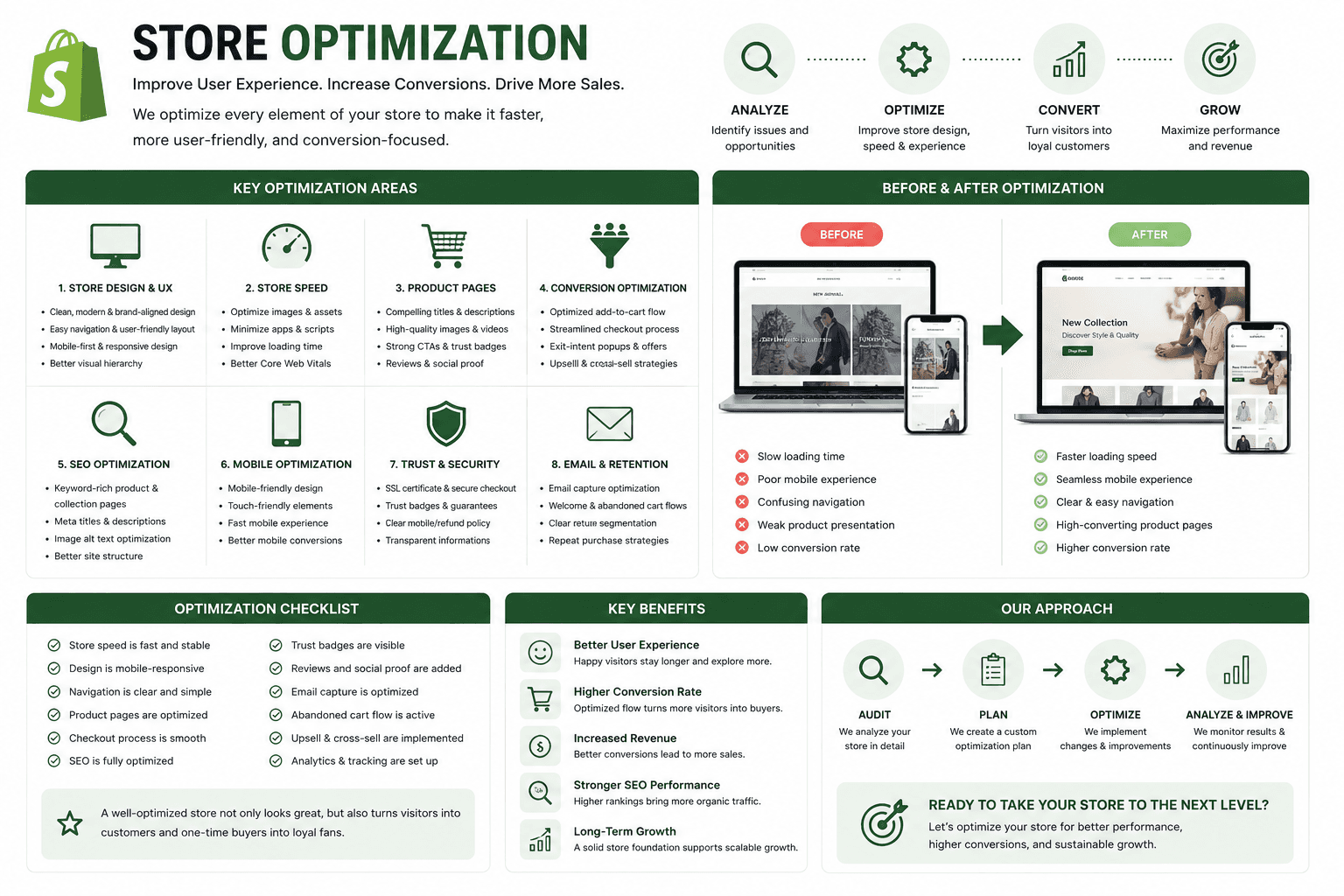

Store optimization is the continuous process of improving every part of an ecommerce store to increase performance, enhance customer experience, and maximize sales. It focuses on making a store faster, easier to use, more trustworthy, and more conversion-focused so visitors are more likely to become paying customers. Many online stores receive traffic but struggle to generate consistent sales because the shopping experience is not properly optimized. Store optimization helps identify weak areas in the customer journey and improve them step by step. The goal of store optimization is not only to make a store look good, but to make it perform better. A well-optimized store creates a smoother buying experience, reduces customer frustration, increases trust, and improves conversion rates. Store optimization involves analyzing customer behavior, testing improvements, and making strategic updates that encourage visitors to take action.
Why Store Optimization Matters: In ecommerce, small improvements can create massive results. Even slight increases in loading speed, product presentation, or checkout experience can significantly impact sales and customer retention.
Customers today expect:
Fast-loading websites
Mobile-friendly browsing
Professional design
Easy navigation
Secure checkout experiences
Clear product information
If a store feels slow, confusing, outdated, or untrustworthy, visitors often leave without purchasing. Store optimization helps remove these obstacles and improve the overall shopping experience.
Benefits of store optimization include:
Higher conversion rates
Better user experience
Increased customer trust
Lower bounce rates
Faster store speed
Improved SEO rankings
More repeat customers
Increased revenue and profitability
Key Areas of Store Optimization:
1. Store Speed Optimization: Speed is one of the most important parts of ecommerce success. Customers expect pages to load quickly, especially on mobile devices.
2. Mobile Optimization: Most ecommerce traffic now comes from smartphones and tablets. If a store does not work properly on mobile devices, a large percentage of potential customers may leave immediately.
3. Product Page Optimization: Product pages are one of the most important conversion areas in an online store. A weak product page can reduce trust and lower sales even if the product itself is excellent.
4. Conversion Rate Optimization (CRO): Conversion optimization focuses on increasing the percentage of visitors who complete desired actions such as:
5. User Experience (UX) Optimization: User experience refers to how visitors interact with the store. A confusing or frustrating experience can push customers away quickly.
6. SEO Optimization: SEO (Search Engine Optimization) helps stores rank better on search engines like Google. Better rankings increase organic traffic and reduce dependence on paid advertising.
7. Trust & Security Optimization: Customers are more likely to buy from stores that appear safe and trustworthy.
8. Checkout Optimization: Many customers abandon their carts during checkout because the process feels too long or complicated.
9. Content & Visual Optimization: Visual presentation strongly affects buying decisions. Customers are naturally attracted to stores that look modern, clean, and professional.
10. Data & Analytics Optimization: Successful store optimization relies heavily on analyzing data and customer behavior.
A properly optimized store not only looks professional but also performs efficiently, converts visitors into customers, and supports long-term business growth. In ecommerce, optimization is what transforms a normal store into a high-converting and scalable online business.